Posts

Showing posts with the label Northern flicker

A Sign of Warmer Weather

Image
The months of January and February have been bitterly cold in Kitchener. The last areas of free-running water were confined to the faster-moving water flowing from the Wetlands. Shallow areas that attracted song sparrows to plodge in the small trickling streams as they searched for fallen seeds. And then came the cold!  With the ground completely covered in snow and the water frozen song sparrows were left to feed on what seeds they could find on the remaining flowering stems of plants that had long withered away. American tree sparrows, with their rusty crest and bicolored bill, were also on the search for seeds. They were seen briefly, flitting from branch to branch. Redpolls appeared utterly oblivious to the freezing conditions. A female redpoll is pictured below feeding on the seeds of a goldenrod plant. When the goldenrod seeds were exhausted, the redpoll's main food source was still in good supply. The seeds of Alder trees are available only to those with a specific skillset....
Predators of the Wetlands Continued

Image
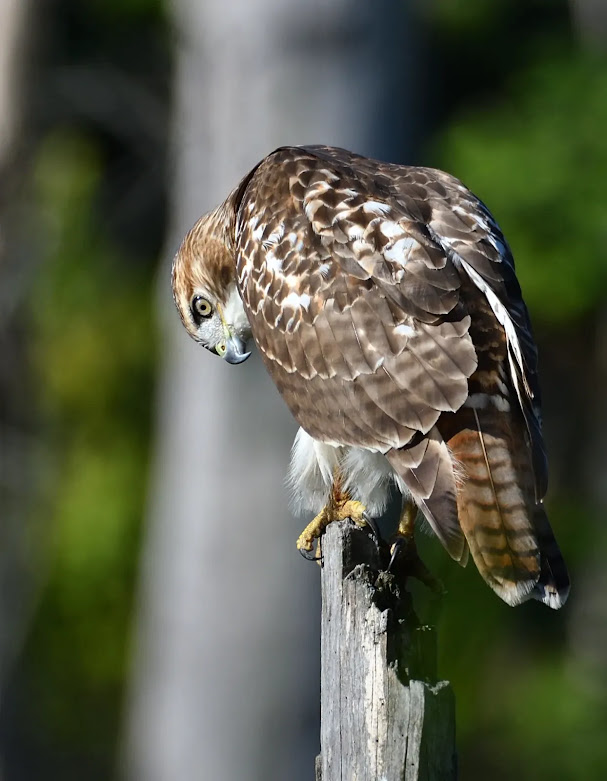
 A return to the Wetlands with a pair of rubber boots enabled me to go a little further than just the edge of the trees.  An open vantage point surrounded by so many perches brought about the last animation in my previous post and also this photo of a red-tailed hawk. Soaring wings in the distance caught my eye. The distinct shape of a turkey vulture, no more than a speck of black drifting in the wind, but it seemed to be moving closer.  I'd already stumbled upon the leftovers of an animal that had become victim to a predator and perhaps my clumsy rubber boots had scared off the predator before it could finish its meal. Surely the turkey vulture would not be able to detect the remains from that far away. I was wrong. The turkey vulture closed in and circled around. Before it finally came to rest on a dead tree stump right beside me! Turkey vultures do not look quite as noble as hawks and eagles with the lack of feathers on their heads, but they really are very impressive ...

Predators of the Wetlands

Image
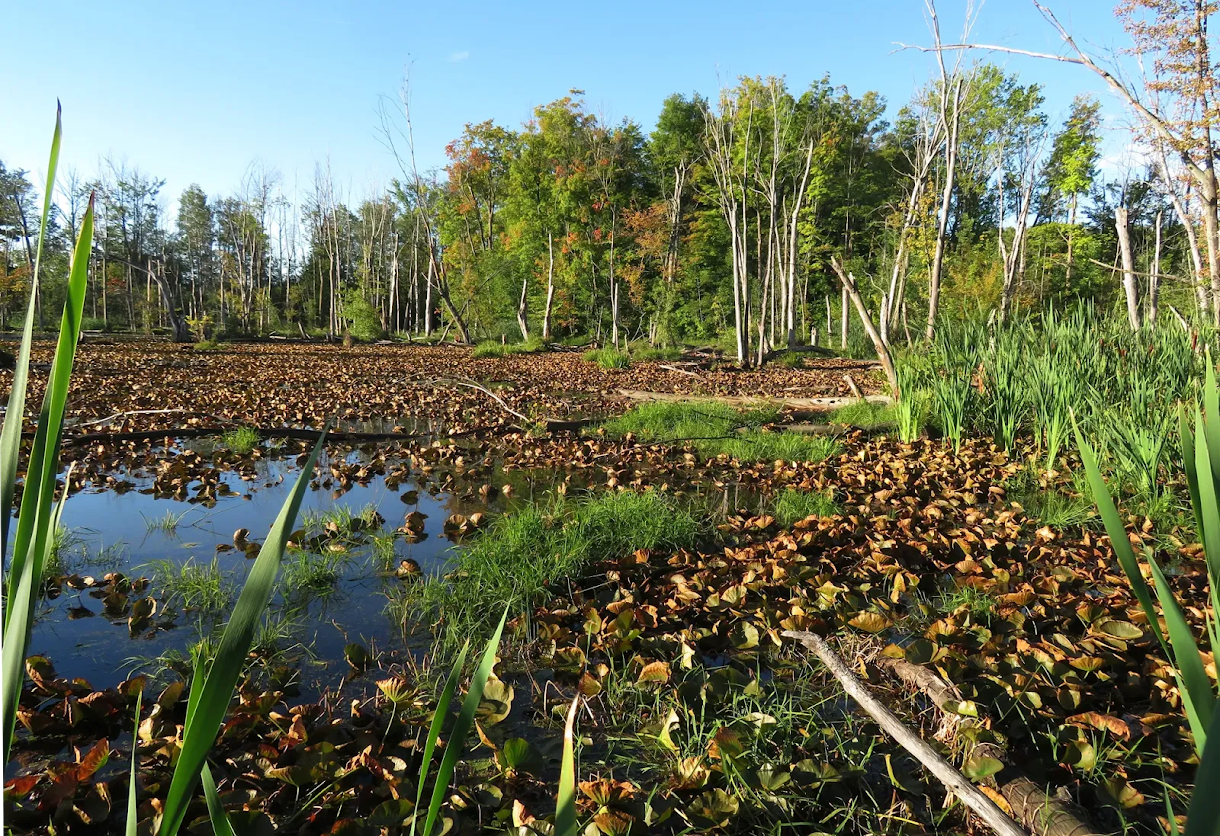
 A primordial soup filled with twisting limbs and rotting carcasses, a mosquito-infested swampland more likened to the time of the dinosaurs than modern-day Kitchener and only a few minutes away from my home. What could be more inviting! The carcasses that I am referring to are of course the rotting tree trunks that still stand in the waterlogged ground, compelled to reach skyward until their demise. The Wetlands are far from dead though, they are brimming with life, which attracts me and also predators. Hawks are suited to open woodland, and in the morning that I decided to go to the Wetlands, I was lucky enough to have two to choose from. These large predators are energy conscious. Why waste energy needlessly. All you need to do is watch from a high enough vantage point and wait. Wait for the right moment, then swoop down on your unsuspecting target. Red-tailed hawks can see colours as we do, but their vision is much sharper than ours and they have the added advantage of perceivi...