Posts

Red-Tailed Hunters

Image
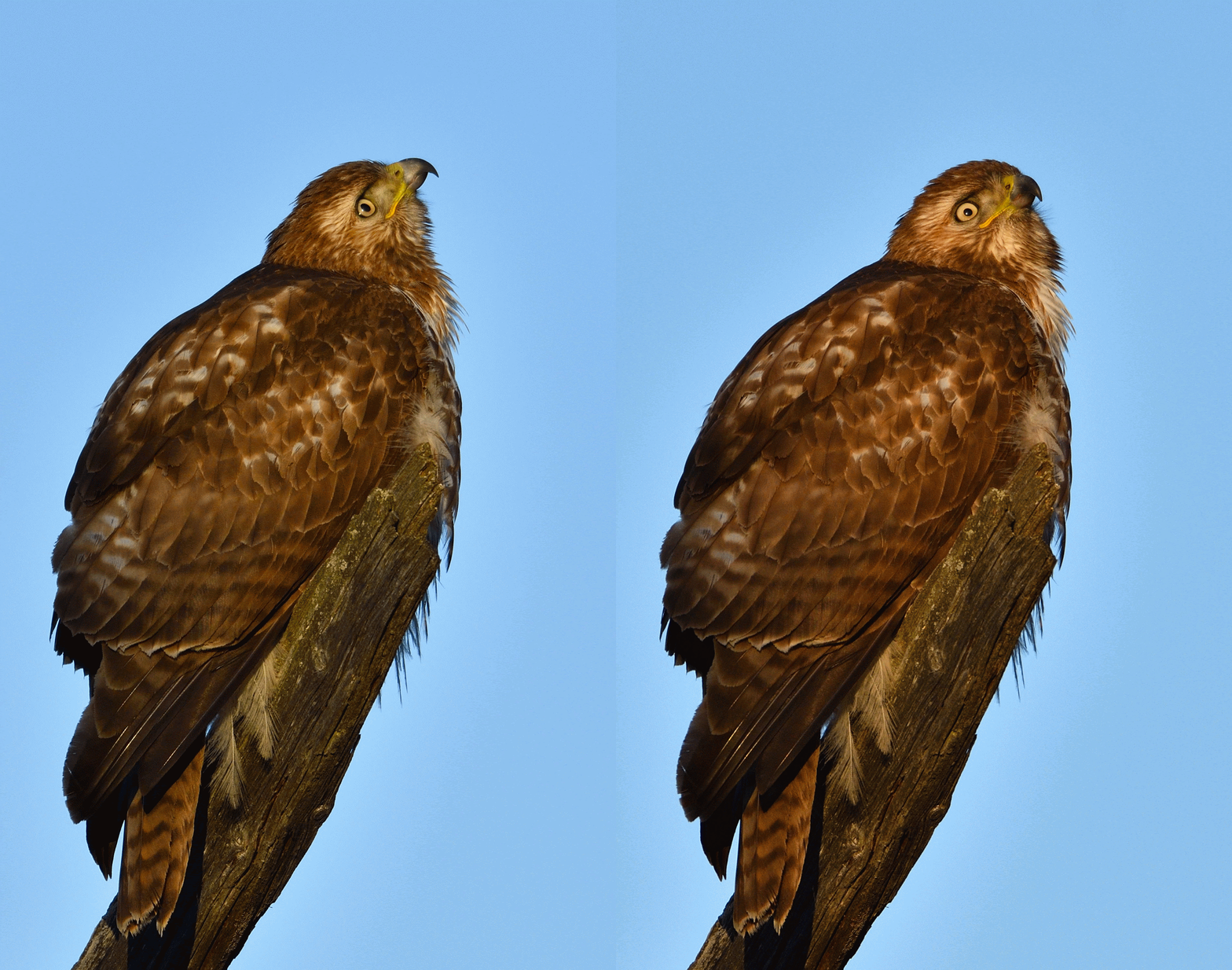
I feel the need to preface this post with a warning; if you are in the slightest squeamish, then perhaps this post is not for you. It might be better to skip forward to the next post, which will be very pleasant and all about my observations of hooded mergansers. If you are not squeamish, then let's proceed where I left off with the previous post. The return of the red-tailed hawks provided a welcome target for my lens.  These predators are so well adapted to their environment. They are powerful yet graceful, fierce and yet can be incredibly patient. The thought did occur to me the next day, as I watched one of the two red-tailed hawks, that I had never observed the hawks with a kill.  I mean, sure, I had seen many failed attempts but never actually catching anything. No sooner had the thought crossed my mind when the red-tailed hawk swooped up to a perch directly to my left with, unfortunately, the sun behind it. The red-tailed hawk focused on the mallards, who had already es...

Waiting for the Ice to Thaw

Image
The lone northern flicker, pictured in the previous post, was indeed a sign that the seasons are moving forward. With warmer weather, the snow and ice had begun to melt. The warmer temperatures gave pleasant relief after the harshness of winter, but the Wetlands remained frozen.  Canada geese arrived in numbers. The geese paired up and the males stoutly defended what would be their nesting areas. The geese appeared determined to wait for the ice to thaw. Webbed feet are not well adapted for use on a sheet of ice. The geese's small talons provided little traction. Disputes between the pairs of geese were commonplace and usually resolved with a deal of posturing and honking. When resolve could not be found from the usual bluffing, things became physical and what followed appeared to be quite barbaric in nature. At first glance, these two warring geese appeared to be locked beak to beak, attempting to cause physical harm to their opponent, but on closer inspection of the photos, it be...

A Sign of Warmer Weather

Image
The months of January and February have been bitterly cold in Kitchener. The last areas of free-running water were confined to the faster-moving water flowing from the Wetlands. Shallow areas that attracted song sparrows to plodge in the small trickling streams as they searched for fallen seeds. And then came the cold!  With the ground completely covered in snow and the water frozen song sparrows were left to feed on what seeds they could find on the remaining flowering stems of plants that had long withered away. American tree sparrows, with their rusty crest and bicolored bill, were also on the search for seeds. They were seen briefly, flitting from branch to branch. Redpolls appeared utterly oblivious to the freezing conditions. A female redpoll is pictured below feeding on the seeds of a goldenrod plant. When the goldenrod seeds were exhausted, the redpoll's main food source was still in good supply. The seeds of Alder trees are available only to those with a specific skillset....